
Jane Mose
Author, speaker, teacher, and mom dedicated to showing Christian love to children with extraordinary challenges and their families
Jane Mose
Author, speaker, teacher, and mom dedicated to showing Christian love to children with extraordinary challenges and their families
What is visual noise?
“Visual” noise? Those two words don’t seem to go together, do they? When we think of noise, we usually think of sounds—usually overly loud, distracting sounds. Visual noise is just like that: overly stimulating and distracting. And we often see it in school classrooms.
Most teachers work hard to decorate their classrooms. They use bright, multicolored rugs on the floor and posters on the walls. They cover bulletin boards with cut-outs of various themes that are changed throughout the year. They might even paint scenes on the walls or around the classroom door. They set up bins of supplies throughout the room, such as buckets of crayons and other art supplies, shelves full of learning toys, stands with puppets, and racks full of books. They add brightly colored nametags to desks and label objects and areas around the room with colorful signs. They provide a cheerful place to display good work done by the students. And the result is a bright, colorful, appealing room!
It is also a room that may stifle students’ learning.
Many of the most colorfully decorated and busiest-looking classrooms are preschool and kindergarten rooms. Yet research suggests that too many things in the visual environment of young children can have huge negative impacts on their attention and learning.1 Research has shown the same problem for older elementary and middle-school children. They were found to learn less well in a visually distracting room than in a room with fewer things to look at. This impact became even more pronounced for children with Autism Spectrum Disorder.2 Clutter stresses children’s systems and overloads their working memory.
It stands to reason that visual noise would also make paying attention more difficult for students with Attention Deficit-Hyperactivity Disorder, who already struggle with distractibility. And students with Sensory Processing Disorder who easily feel overwhelmed by too much visual stimuli may also struggle in a classroom with too much visual noise, leading to behavioral incidents.
How can teachers reduce visual noise and still have appealing-looking classrooms?
Reducing visual noise doesn’t mean that your classroom needs to look boring or cold. Here are some tips that might help:
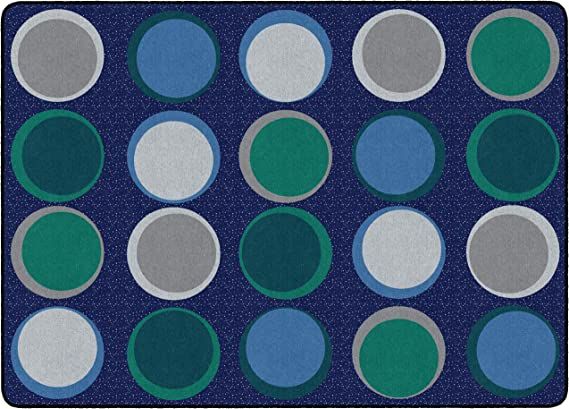
Reducing visual noise is important for all classrooms, but especially important for special education classrooms. But don’t worry—with a little creativity, it can be done in a very attractive way as well!
1 Fisher, A. V., Godwin, K. E., & Seltman, H. (2014). Visual environment, attention allocation, and learning in young children when too much of a good thing may be bad. Psychological Science, 25, 1362–1370.
2 Hanley, M., Khairat, M., Taylor, K., Wilson, R., Cole-Fletcher, R., & Riby, D. (2017). Classroom displays-attraction or distraction? Evidence of impact on attention and learning from children with and without autism. Developmental Psychology.
We need your consent to load the translations
We use a third-party service to translate the website content that may collect data about your activity. Please review the details in the privacy policy and accept the service to view the translations.